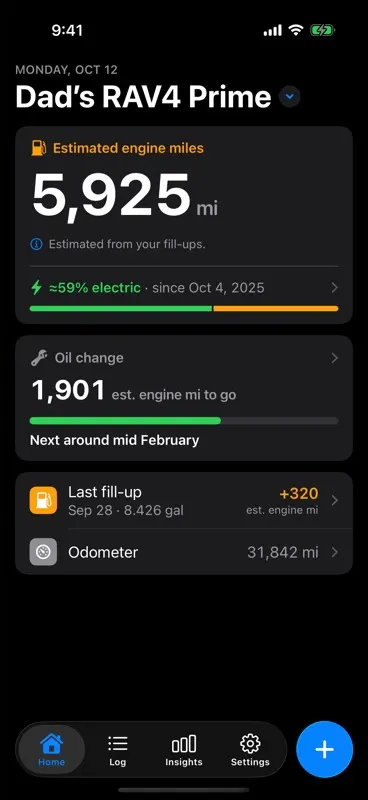
 EngineMiles
Use gasoline-mode MPG. For a PHEV engine-mile estimate, choose the fuel economy for driving without drawing down a plugged-in charge. An overall dashboard average and MPGe answer different questions.
Three numbers, three meanings
| Number | What it tells you | Use for engine miles? |
|---|---|---|
| Gas-only MPG | Distance per gallon in gasoline / charge-sustaining operation. | Yes, as a starting assumption. |
| Overall dashboard MPG | Total distance per gallon, potentially including plugged-in electric miles. | Check what it includes first. |
| MPGe | Efficiency expressed using the energy equivalent of a gallon of gasoline. | No. |
The EPA’s PHEV label explanation separates the electric-operation MPGe box from the gasoline-operation MPG box. Gas-mode driving still uses the hybrid system; “gas-only” does not mean the electric motors never help.
Find a gas-mode starting figure
- Match your vehicle. Find the model year, trim, drivetrain, and plug-in variant. A regular Prius or RAV4 Hybrid is a different entry from its plug-in counterpart.
- Look for gasoline operation. In the US, use FuelEconomy.gov’s vehicle comparison or your manufacturer’s published specifications. Look for gasoline MPG, hybrid-mode MPG, or charge-sustaining fuel economy.
- Check the units. Confirm whether the rating uses US gallons, imperial gallons, or liters per 100 kilometers before entering it.
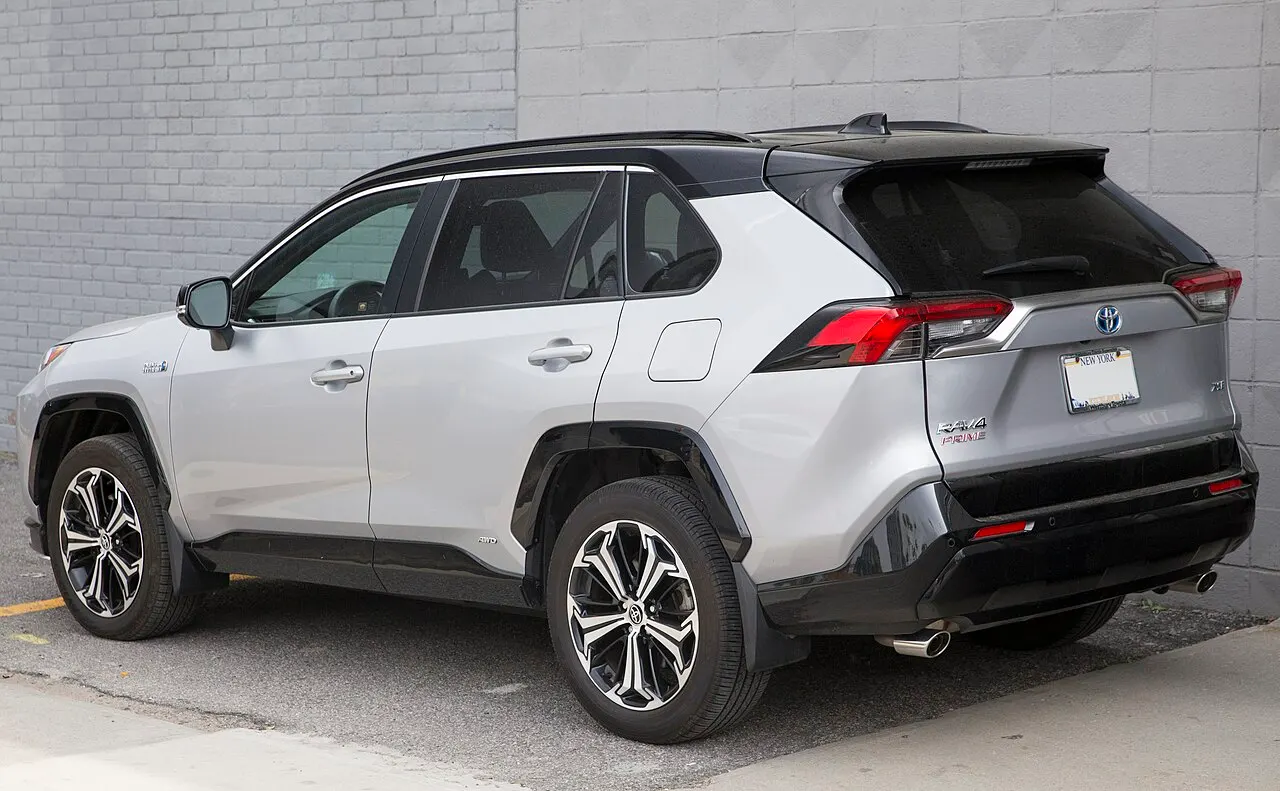
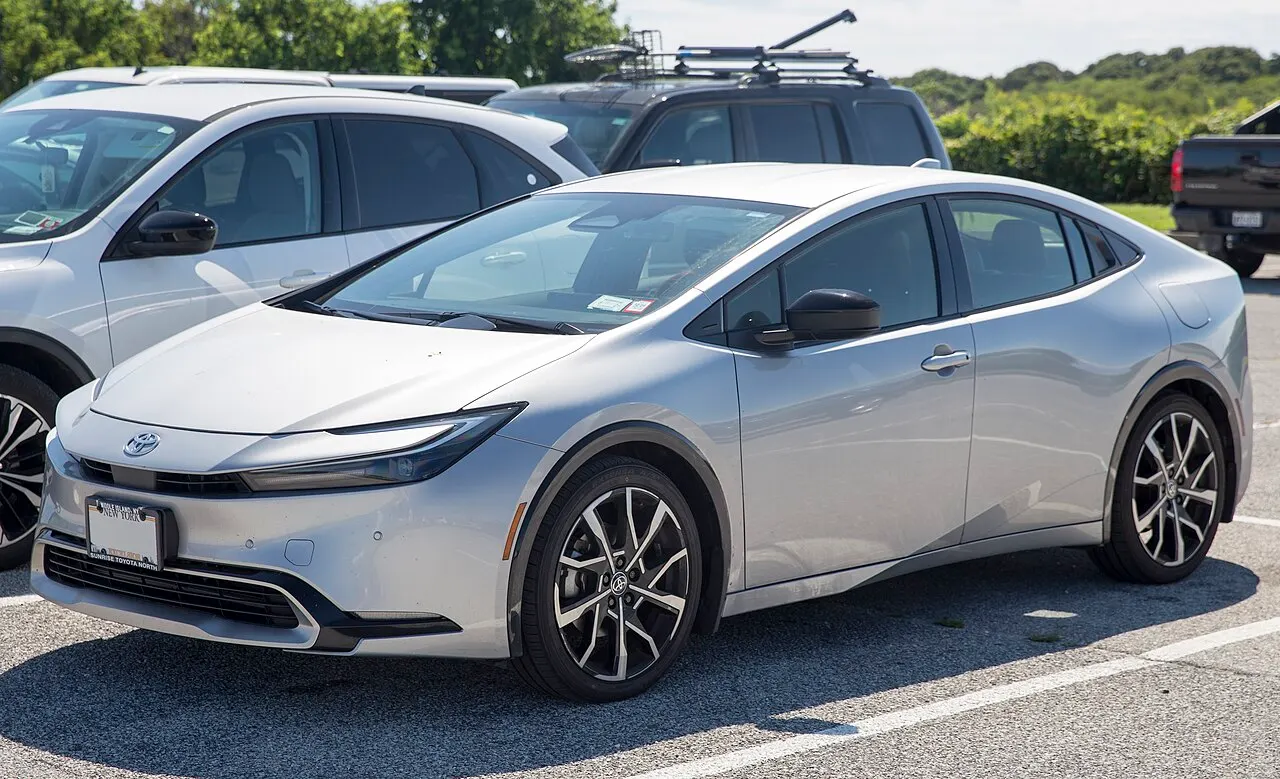
Our RAV4 Prime guide and Prius Prime guide show model-year examples. They are starting points, not a single recommended figure for every year or trim.
Why the choice matters
Imagine a full-to-full period of 1,000 odometer miles, with 10 gallons bought between those full tanks. Dividing total distance by fuel gives an overall average of 100 MPG.
10 gal × 40 gas-mode MPG ≈ 400 engine miles
Using the 100 MPG overall average instead would give 1,000 engine miles. That simply returns all the distance you started with, including plugged-in driving. A suitable gas-mode assumption makes the fuel-based estimate a separate, useful number.
Keep your units and assumptions consistent
US and imperial gallons have different volumes. Don’t copy a UK MPG figure into a vehicle set to US MPG. Metric consumption works the other way around: fewer L/100 km means higher efficiency. EngineMiles supports these unit choices.
A published rating is a starting assumption. Real fuel economy changes with driving conditions, and the resulting engine miles remain an estimate. A dashboard figure measured over gas-mode-only driving may help you understand your own usage, but check its reset period and whether electric driving is included before using it.