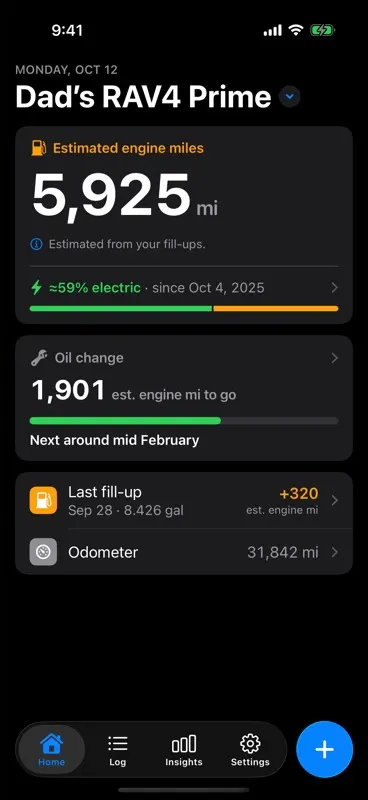
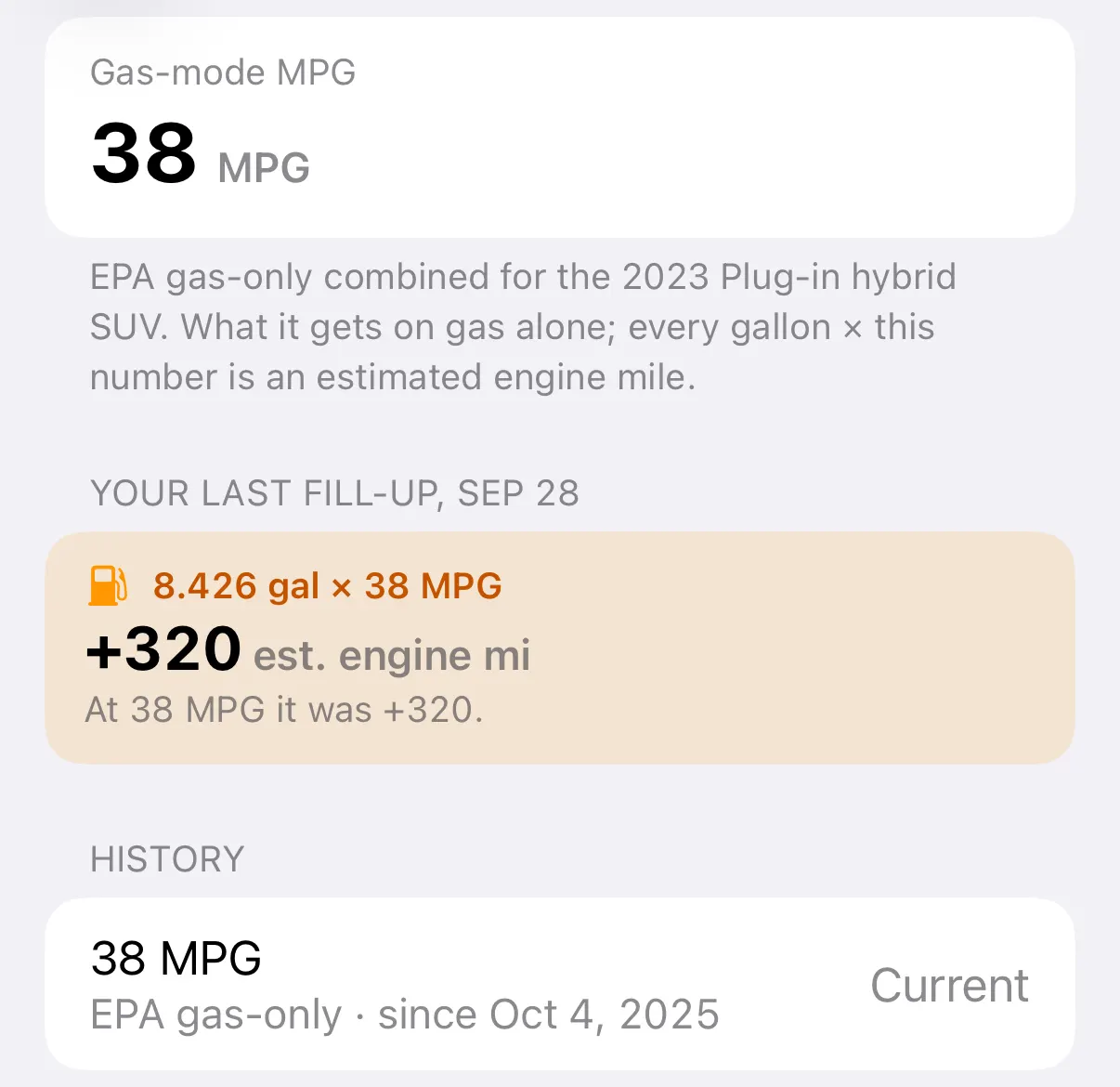
 EngineMiles
Start with the trip history your Volvo provides. A log of distance, gasoline, and electricity is useful, but it is not automatically a lifetime engine-mile counter. If you want a separate running estimate, a manual full-to-full fuel log can translate gasoline use into estimated engine miles.
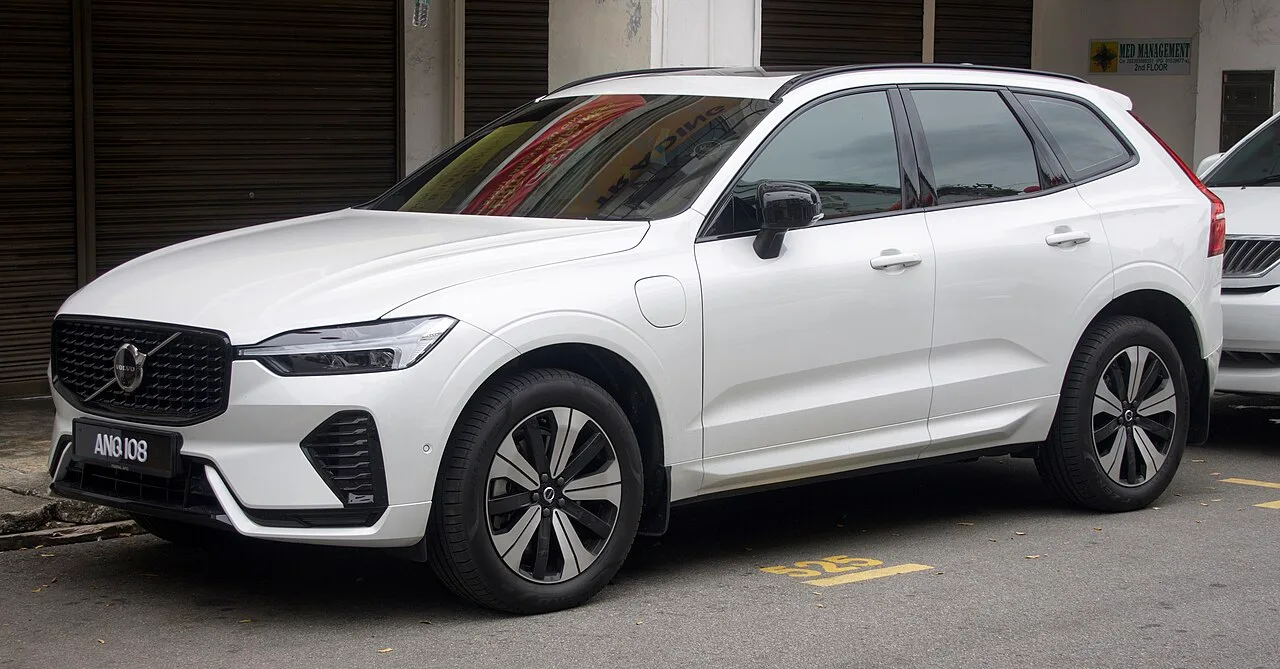
XC60 T8 photographed in Malaysia. This guide covers the plug-in XC60 and XC90; check the instructions for your own model.
LuvsMG481 / Wikimedia Commons / CC BY-SA 4.0. Resized and converted to WebP; photo remains under the linked license.
Trips, Driving Journal, and your model year
Volvo’s current Trips setup instructions for cars with Google built-in describe recording journeys with time, distance, fuel, and electric consumption. You enable the trip log in the Volvo Cars app and allow the required location permissions. Volvo says availability depends on model, year, and region, and that trips are retained for 400 days.
You may know the feature as Driving Journal. Volvo’s official Trips app listing describes viewing journeys, adding notes, and exporting them. Check the options actually offered for your XC60 or XC90 and save any export you want to keep longer.
These setup directions are for Google built-in vehicles. If yours has Sensus or a different app layout, open Volvo’s support information for that exact vehicle. This guide concerns the plug-in XC60 and XC90 sold under names including T8, Twin Engine, and Recharge; it does not describe a fully electric Volvo or a mild hybrid.
Why trip consumption is not engine distance
A 40-mile journey that uses gasoline and electricity does not tell you exactly how many of those miles involved the engine. Fuel volume measures consumption; kilowatt-hours measure energy. Neither is a distance counter without additional information or an assumption.
Consider a sample day with 40 total miles and 0.5 US gallons consumed. Dividing 40 by 0.5 gives 80 MPG across the whole journey. It does not establish that the engine achieves 80 MPG while operating. Using that same overall MPG to estimate engine miles would simply return all 40 miles.
That distinction is the heart of this owner question about combustion-engine mileage. We use the discussion to identify the question, not as verification of what every Volvo records.
Use a separate gas-mode assumption
For an illustrative full-to-full interval, suppose you consume 10 US gallons and use a gasoline-mode assumption of 28 US MPG:
10 US gal × 28 US MPG ≈ 280 estimated engine miles
The 28 MPG value is an example, not a universal XC60 or XC90 specification. Match the input to your model year, powertrain, and market. The XC60 and XC90 need not have the same gasoline-operation rating, and MPGe is not the input for this calculation. Use the official EPA comparison tool for US models.
Try it in the engine-mile calculator. The result is a fuel-based distance estimate. It does not reveal engine hours, recover unlogged trips, or prove the amount of mechanical wear.
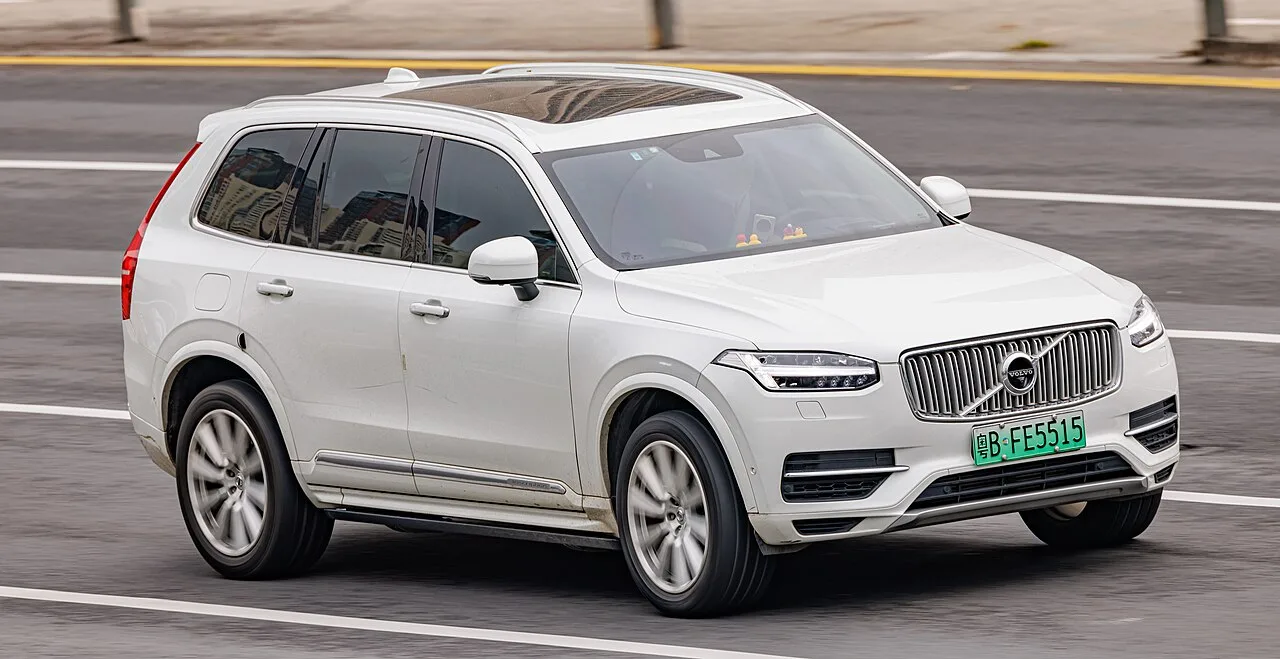
XC90 T8 photographed in China. Trip-history features vary with model year, infotainment system, and market.
Dinkun Chen / Wikimedia Commons / CC BY-SA 4.0. Resized and converted to WebP; photo remains under the linked license.
Keep the useful records together
- Save the original trip history. Keep dates, odometer readings, and available exports. Mark missing journeys instead of assuming they were electric.
- Use full tanks to define fuel intervals. Record the opening fill, any partial fills, and the next full fill. Count fuel bought after the opening baseline through the closing fill.
- Label the method. Keep Volvo-recorded data and a fuel-based estimate in separate fields. Differences between them are not automatically faults.
- Choose a starting point you can defend. If you bought used and lack older records, begin there. Today’s driving pattern cannot reconstruct the previous owner’s engine use.
Common XC60 and XC90 questions
Can I use a remaining electric-range number?
No. Remaining range is a forecast. Subtraction requires recorded electric distance and total distance covering the same period, with the electric-distance definition checked in your manual.
Does EngineMiles sync with the Volvo Cars app?
No. It keeps a manual fill-up log and calculates an estimate using your chosen gas-mode fuel economy. You can keep Volvo’s trip exports separately as another part of your vehicle record.
Does mostly electric driving change the service schedule?
Follow Volvo’s guidance for your vehicle, including calendar limits. An engine-mile estimate is useful context, not a replacement for the maintenance schedule.